Anti-Slavery Day 2026
Posted: 14.10.26

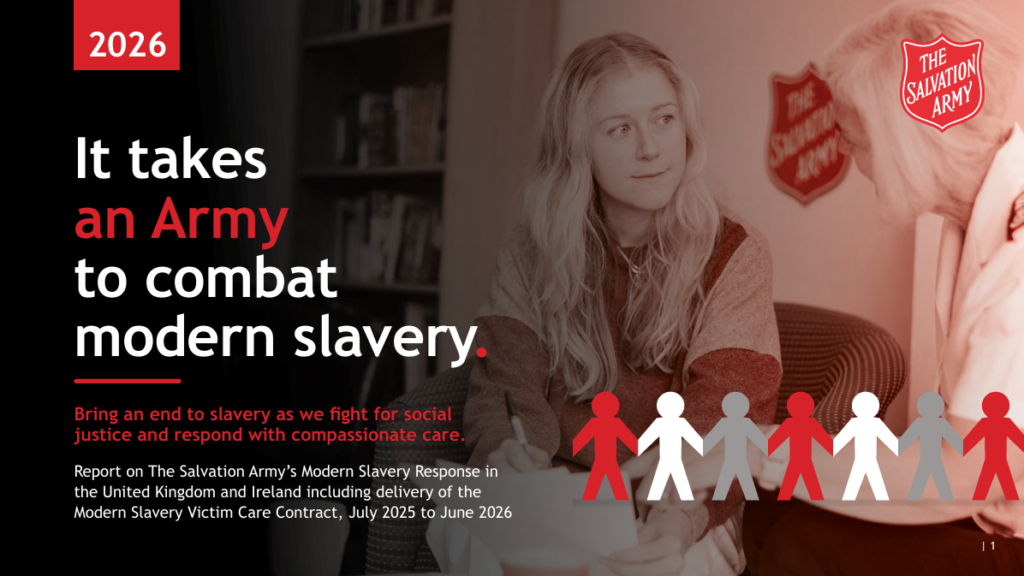
Sunday 18th October is Anti-Slavery Day. This week, The Salvation Army UK published their latest report on its work supporting adult survivors of modern slavery in England and Wales through the Government’s Modern Slavery Victim Care Contract (MSVCC).
The report reveals that criminals target vulnerable people. You can read more on The Salvation Army’s website: Salvation Army Modern Slavery Report 2026.
Below are some of the highlights from the report:
-
- 364 British nationals entered Salvation Army modern slavery support services in 2025-26 and around one in four (145) had experienced criminal exploitation.
- Survivors from 123 nationalities sought help from The Salvation Army.
- 5,185 potential victims entered support
People are often targeted because of vulnerabilities including poverty, isolation, trauma and addiction before being manipulated, threatened, and controlled. Cuckooing, where criminals take over someone's home for criminal purposes, is another tactic.
Major Kathy Betteridge, Director of Anti Trafficking and Modern Slavery for The Salvation Army, said:
“Criminals are skilled at identifying vulnerability and using it to their advantage. Poverty, family breakdown, addiction and social exclusion can leave people with fewer safe choices and sources of support, allowing an exploiter to appear at first to offer help before using that dependency to gain control.
We see that the longer someone is exploited, the harder it is to overcome the impacts on their health, wellbeing, relationships and prospects for the future. That is why identifying victims as early as possible is so important. Greater public awareness and better training for frontline professionals can help people identify victims sooner and connect them with support before the harm becomes more deeply embedded.”
Including those already receiving support at the start of the year, 10,584 people received support through the MSVCC during 2025-26. Since 2011, The Salvation Army and its partners have supported 32,736 survivors of modern slavery.
The Salvation Army’s support brings together specialist staff, volunteers, churches and communities, survivor voices, practical resources and national and international networks to help people regain stability and build more independent futures. Its First Responder Service helps identify potential victims and refer them into the National Referral Mechanism – the Government’s system for identifying and supporting victims of modern slavery - while wider programmes provide additional opportunities and practical support beyond the Government-funded service.
Major Kathy Betteridge added:
“Everyone has a part to play. Learning the signs and knowing how to report concerns safely can help bring people out of the shadows and closer to the support they need.”
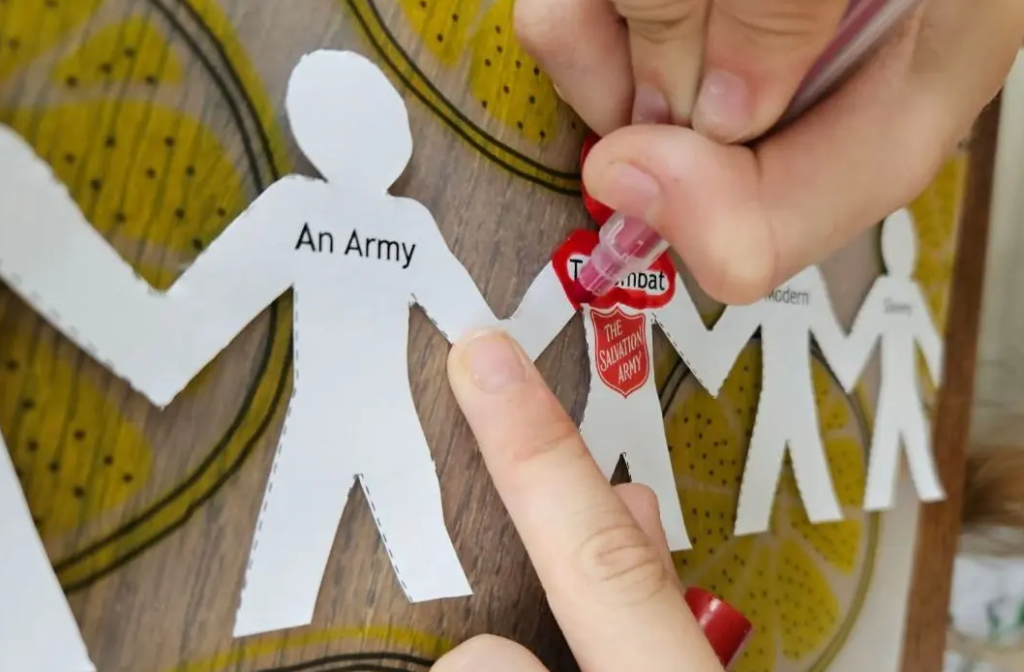
How can you help?
The Salvation Army is encouraging people to learn the signs of modern slavery and county lines exploitation, trust their instincts and report concerns safely. Anyone who suspects that they or someone they know may be a victim of modern slavery and needs help can contact The Salvation Army’s confidential 24-hour referral helpline on 0800 808 3733.
Spot the signs
Learn to spot the signs of modern slavery and report when you see something suspicious. Some signs are physical, but some are much less obvious. Educate yourself and others on the signs to look out for.
Read more about modern slavery and the way The Salvation Army help here: salvationarmy.org.uk/modern-slavery